

How to Stop People Pleasing: 7 Gentle Steps
you can be kind and still say no. here's how to start, one small no at a time.
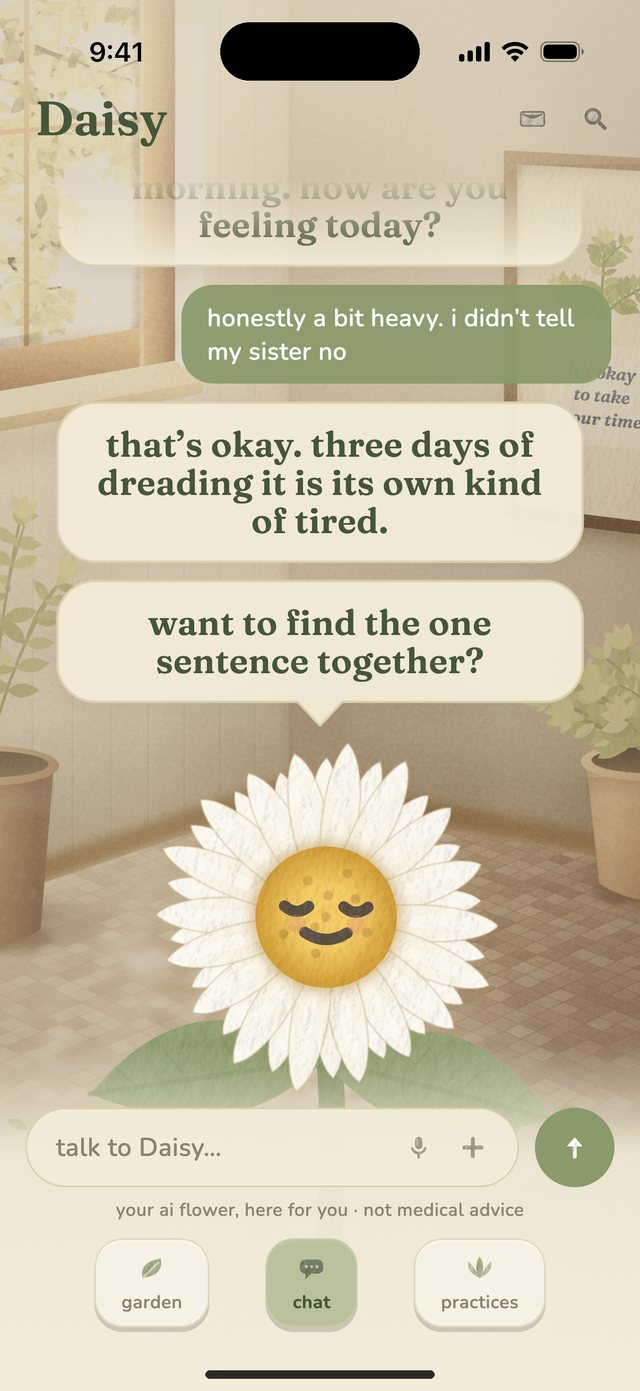
a little self-love guide who lives on your phone: one small kind step a day, and a garden that grows with you.
point your phone's camera at the code to get her.
the short answer
To stop people pleasing, start by noticing your automatic yes, then pause before you answer. Ask yourself what you actually want, and practice saying one small, kind no where the stakes are low. The guilt you feel afterward is normal and fades. It means you're doing something new, not something wrong.
If this pattern feels familiar, you might also like you gave until there was no you left and you do not owe anyone an apology for existing.
what people pleasing really is
People pleasing is putting other people's comfort ahead of your own needs, over and over, until it stops being a choice and starts being a habit. It looks like kindness from the outside. From the inside it often feels like tiredness, quiet resentment, and a strange loneliness, because nobody really knows what you want. Sometimes you don't either.
It usually grows for good reasons. At some point, keeping everyone happy kept things calm, or kept you loved, or kept you out of trouble. So the yes became automatic. The goal isn't to stop being kind. It's to make your kindness a choice again, and to include yourself in it.
Here's a simple test. Kindness leaves you feeling warm. People pleasing leaves you feeling drained, a bit invisible, or secretly annoyed. Same action, different feeling underneath.
which one are you? a quick self-check
People pleasing shows up in a few different ways. Most of us lean toward one or two.
| if this sounds like you | you might be | your first step |
|---|---|---|
| "yes" is out of your mouth before you've thought about it | the automatic yes | step 1: notice the automatic yes |
| you give and give, then feel empty or used | the over-giver | step 5: "that's not mine to fix" |
| you say sorry for things that aren't your fault | the apologizer | step 4: flip the guilty thought |
| you change your opinions to match the room | the shapeshifter | step 2: ask what you actually want |
| you go quiet so nobody gets upset | the quiet one | step 7: let someone see how you really are |
Want a gentler, deeper look? The free bloom quiz shows which of these patterns you lean on and the strength underneath it.
7 gentle steps to stop people pleasing
-
1. notice the automatic yes
You can't change a habit you can't see. For one week, just notice. Every time you say yes, ask afterward: did i want to, or did i just not want to say no?
Don't fix anything yet. Noticing is the work. You'll start to see a pattern: certain people, certain times of day, certain kinds of asks. That pattern is your map.
When you catch yourself about to say yes on autopilot, try a pause phrase instead:
- "let me check and get back to you."
- "can i think about it tonight?"
- "i'm not sure yet, i'll let you know."
A pause isn't a no. It just gives the real you a moment to arrive.
-
2. ask what you actually want
After years of pleasing, "what do i want?" can feel like a hard question. Make it smaller. Try this three-second check:
if nobody would be upset either way, would i say yes?
If the answer is yes, wonderful. Say yes and mean it. If the answer is no, you've found the gap between what you want and what you do. That gap is where the tiredness comes from.
It also helps to name the cost. Saying yes to this means saying no to what? Your evening, your sleep, your quiet morning, the walk you meant to take. You might still say yes. But now it's a decision, not a reflex.
-
3. say one small, kind no
Don't start with the hardest person in your life. Start somewhere small, where a no costs almost nothing: a second helping, an extra errand, an invitation you weren't excited about.
Keep it short and warm. You don't need a long reason. Long explanations often invite people to argue with them.
- "not today, thanks."
- "i can't this time, but thank you for thinking of me."
- "that doesn't work for me, but i hope it goes well."
Then stop talking. Let the silence be okay.
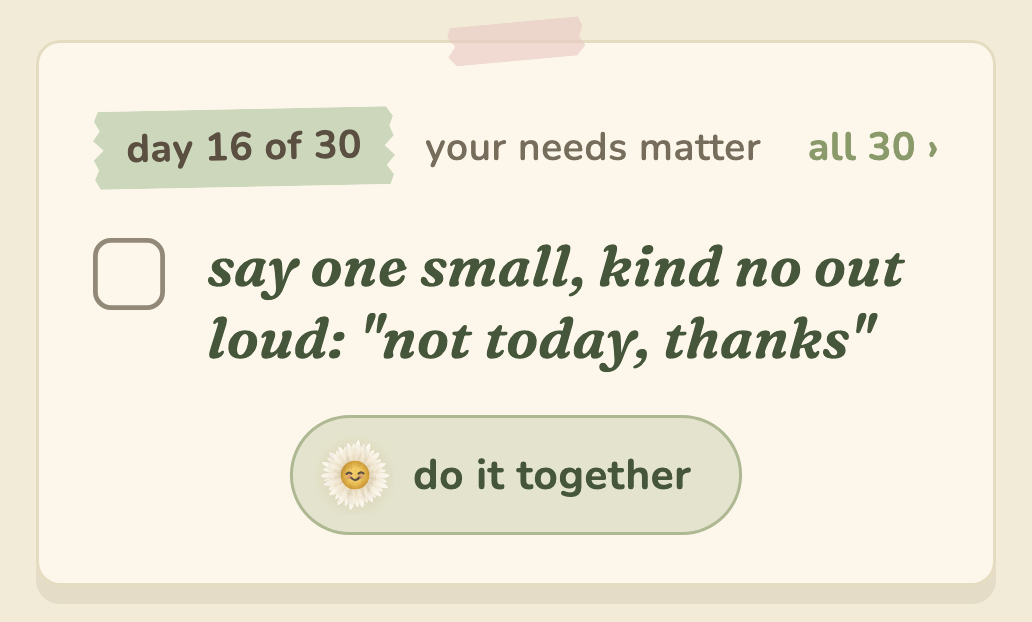
In Daisy's 30-day self-love journey, one day is exactly this: say one small, kind no out loud, "not today, thanks." It feels silly the first time. That's the point. Your mouth learns the shape of the word before your heart has to.
-
4. flip the guilty thought
Right after a no, a harsh thought usually turns up. "that was selfish." "they'll think i'm difficult." "a good friend would have said yes."
You don't have to argue with it or believe it. You can flip it into something kinder and just as true:
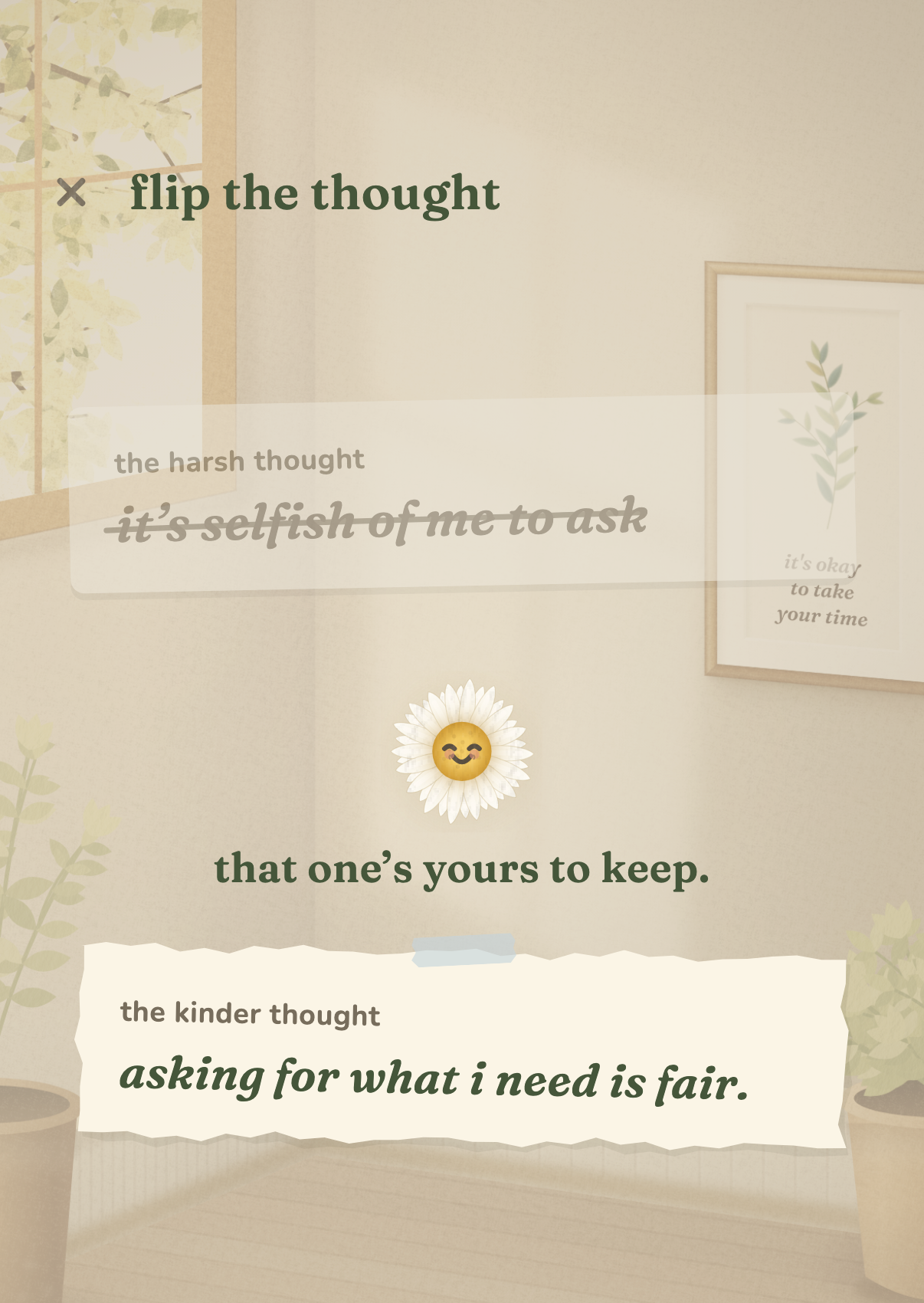
- "it's selfish of me to ask" → "asking for what i need is fair."
- "they'll be upset with me" → "they're allowed to feel disappointed, and i'm allowed to have limits."
- "i should be able to do it all" → "doing less is how i keep going."
The flip doesn't need to feel true straight away. You're giving your mind a second option, and over time it starts to choose it.
This is what "flip the thought" in the Daisy app is for: you type the harsh thought (or start from a common one), pick a kinder flip or write your own, and watch the harsh one get crossed out. It's free for everyone, and the flips you keep are saved, so you can come back to them on hard days.
-
5. say "that's not mine to fix"
Pleasers often carry other people's moods as if they were their own job. Someone's quiet, so you assume you did something. Someone's stressed, so you rush to solve it.
Try saying this out loud, about one thing today: "that's not mine to fix."
It isn't cold. You can still care. You can still listen. You just stop treating every feeling in the room as your responsibility. Other people are allowed to have hard days without you rescuing them, and they're often stronger than you give them credit for.
-
6. give yourself permission in writing
Pleasers wait for permission that never comes. So write it yourself. Finish this sentence three times:
i'm allowed to...
- i'm allowed to rest before everything is done.
- i'm allowed to change my mind.
- i'm allowed to want things just for me.
Writing makes it real in a way thinking doesn't. Keep the list somewhere you'll see it. Add to it whenever you catch yourself asking for permission you don't need.
-
7. let someone see how you really are
The quietest part of people pleasing is hiding. "i'm fine!" when you're not. Taking care of everyone, letting nobody take care of you.
So practice receiving. When someone pays you a compliment, don't brush it off. Try: "thank you. i'll take that." When someone asks how you are, give one honest sentence instead of "fine."
Start with the safest person you know. Being seen, even a little, is what makes all the other steps easier. Saying no gets less scary when you know you're liked for who you really are, not for how much you do.


how to handle the guilt
Here's the honest part: you will probably feel guilty, especially at first. That guilt isn't proof you did something wrong. It's what change feels like when you've spent years being rewarded for saying yes.
A few things that help:
- let it pass instead of fixing it. The guilt usually fades within minutes or hours if you don't rush back to undo your no.
- notice what actually happened. Most of the time, people take a kind no much better than you feared. Keep a little note of these moments.
- talk to yourself like a friend. If a friend said this no, would you call them selfish? Probably not.
common mistakes
- starting with the hardest person. Begin where the stakes are low. Build the muscle first.
- over-explaining. A long reason sounds like an apology and invites a debate. Short and warm is enough.
- going from yes to everything to no to everything. The goal is choice, not a wall. You'll still say yes plenty. You'll just mean it.
- waiting to feel ready. You won't. Small, kind practice is what makes you ready.
- beating yourself up when you slip. You will say an automatic yes again. Notice it, be kind to yourself, and try the pause next time.
frequently asked questions
why do i people please?
Usually because, at some point, it worked. Keeping others happy kept things calm or kept you close to people who mattered. The habit made sense then. It's okay to outgrow it now.
is people pleasing a bad thing?
Not entirely. It comes from care, which is lovely. It becomes a problem when it costs you your rest, your honesty or your sense of who you are. The aim is to keep the care and add yourself back in.
how do i stop people pleasing without feeling guilty?
You probably can't skip the guilt at first, and you don't need to. Expect it, let it pass without undoing your no, and flip the guilty thought into a kinder one. It gets quieter each time.
what's the difference between being kind and people pleasing?
Kindness is a choice that leaves you feeling warm. People pleasing is a reflex that leaves you feeling drained or resentful. The same action can be either one, depending on why you're doing it.
will people be upset when i stop?
Some might, briefly, especially people who are used to your automatic yes. Most will adjust, and many will respect you more. The people who truly care about you want to know what you really think.
how long does it take to stop people pleasing?
It changes through small, repeated practice, not one big decision. Many people notice a difference within a few weeks of practicing the pause and small no's. Be patient with yourself. You're unlearning years of habit.
is people pleasing a trauma response?
For some people it grew out of hard experiences, and for others it's simply a habit learned in a busy or caring home. If it feels tied to painful memories or makes everyday life hard, talking to a therapist can really help. This guide is for gentle everyday practice, not a replacement for that support.
can an app help with people pleasing?
An app can't do the work for you, but it can make small daily practice easier to keep. Daisy gives you a short self-love step to try each day, a place to flip harsh thoughts, and pages that keep what you've done together.
keep reading
the bottom line
People pleasing isn't a flaw. It's a habit that once kept you safe and now keeps you small. You stop it the same way you started it: one small moment at a time. Pause before the yes. Ask what you want. Say one small, kind no. Let the guilt pass. And remember you're allowed to be on your own list too.
practice with Daisy
Daisy is a little self-love guide who lives on your phone. She gives you one small step a day, helps you flip the harsh thoughts, and remembers how far you've come. The first 7 days of the 30-day journey are free.
get Daisy freeDaisy is a self-love guide, not therapy. If you're struggling, please reach out to someone you trust or a local helpline.